Brass Kadhai Buying Guide: Gauge, Weight, Kalai & Pure Brass vs Alloy
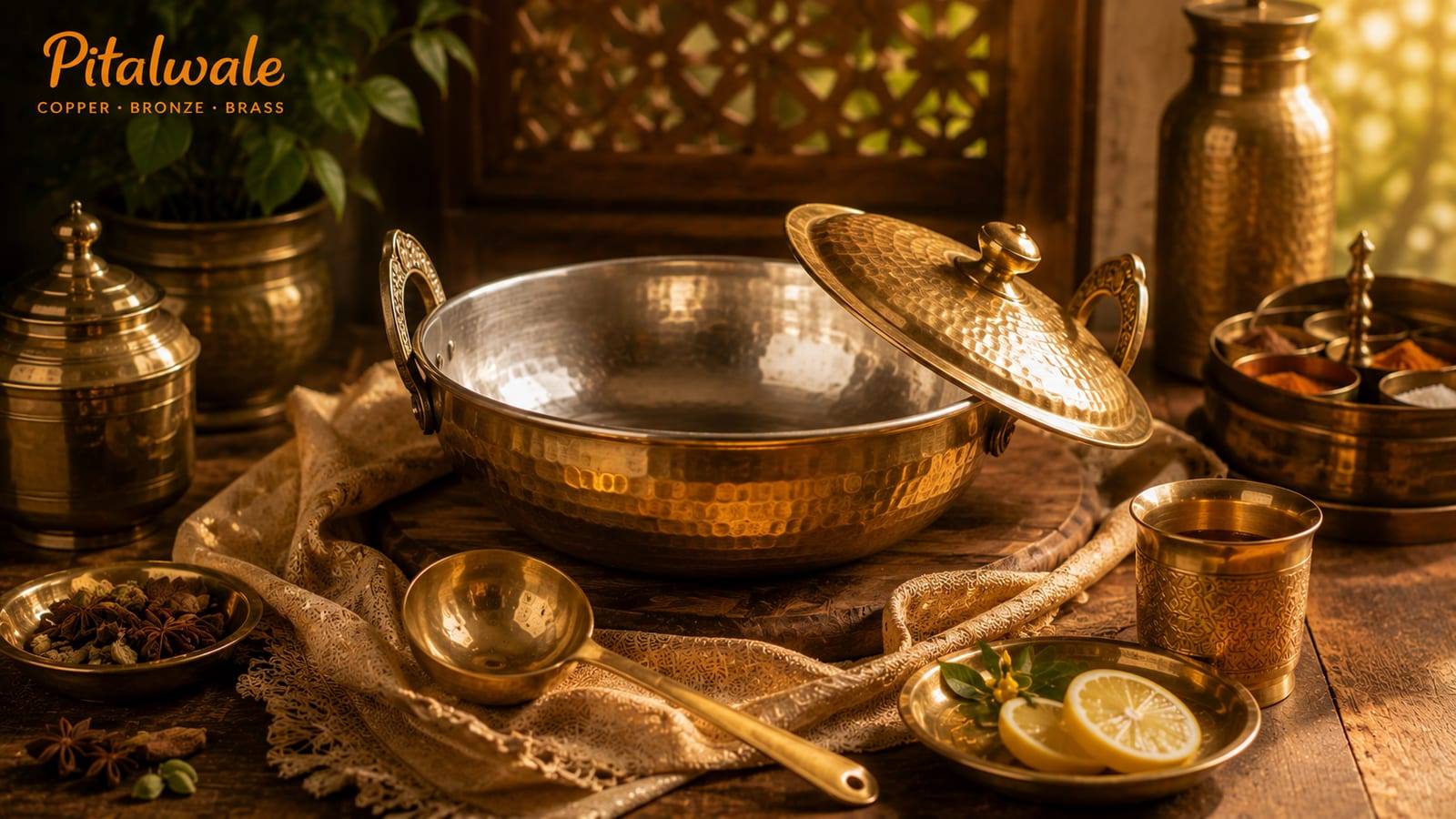
A good brass kadhai is a once-in-a-generation buy — the kind of vessel that outlives the person who bought it. But the market is full of thin, machine-stamped lookalikes that dent in a year. This guide covers everything that actually matters: gauge and weight, tin-lining (kalai), pure brass versus cheap alloy, and hand-hammered craft — so you can tell a lifetime kadhai from a souvenir.
1. Gauge & weight: the single biggest quality signal
Gauge is the thickness of the metal. A serious cooking kadhai is heavy-gauge (roughly 1.5–2.5 mm) and feels reassuringly heavy in the hand. Thin, light kadhais heat unevenly, warp, and dent — they're made for display or to hit a low price. As a rule: if it feels too light for its size, it is. A genuine hand-hammered brass kadhai has real heft and a dense, solid ring when tapped.
2. Tin-lining (kalai): non-negotiable for cooking
Bare brass reacts with salt and acidic food, so traditional cooking brass is coated on the inside with a thin layer of food-safe tin — a process called kalai (tin-lining). A properly kalai-lined kadhai is safe for daily cooking; a bare-brass one is best kept for dry roasting, décor, or serving. The tin layer wears over months of use and is simply re-done (re-tinned) by a kalaiwala — a feature of the tradition, not a flaw.
3. Pure brass vs cheap alloy
- Pure brass is a copper–zinc alloy, classically around a 70:30 copper-to-zinc ratio — warm golden colour, dense, and it develops a rich patina.
- Cheap alloys cut copper with more zinc or filler metals to lower cost. They look paler, weigh less, and don't age gracefully.
- The magnet test: real brass is non-magnetic. If a magnet clings, it's brass-plated steel — avoid it for cooking.
4. Hand-hammered vs machine-pressed
Hand-hammered kadhais from the artisans of Pital Nagri — India's historic brass city — are shaped blow by blow, which work-hardens the metal and makes it stronger. The faint, irregular hammer marks (called chhalni) are the signature of real craft. Machine-pressed vessels are perfectly smooth, uniformly thin, and structurally weaker.
A quick buyer's checklist
- Heavy for its size (heavy-gauge, 1.5 mm+)
- Tin-lined (kalai) inside if you'll cook in it
- Non-magnetic = genuine brass
- Visible hand-hammer marks = real craft
- A maker who offers re-tinning / after-care
Caring for your brass kadhai
Hand-wash only — never a dishwasher. Avoid steel wool on the tin lining. Re-tin (kalai) when the inside starts showing golden brass through the silvery tin. For polishing the outside, see our brass cleaning guide, and for cooking vessels specifically, the brass tawa seasoning guide.
Frequently Asked Questions
Is it safe to cook in a brass kadhai? Yes — provided it is tin-lined (kalai). The tin layer prevents brass from reacting with salt and acidic food. Re-tin it when the lining wears.
How do I know if a kadhai is pure brass? It's non-magnetic, warm golden, heavy for its size, and develops a patina. A magnet sticking to it means brass-plated steel.
Where can I buy a genuine hand-hammered brass kadhai? Our kitchen & dining collection features heavy-gauge, hand-hammered brass cookware made in Pital Nagri.
Bring home a piece worth keeping
Explore our handcrafted brass, copper and bronze collection — free shipping over ₹999.
Shop now