What Is Kalai? Tin-Lining for Brass & Bronze Utensils, Explained
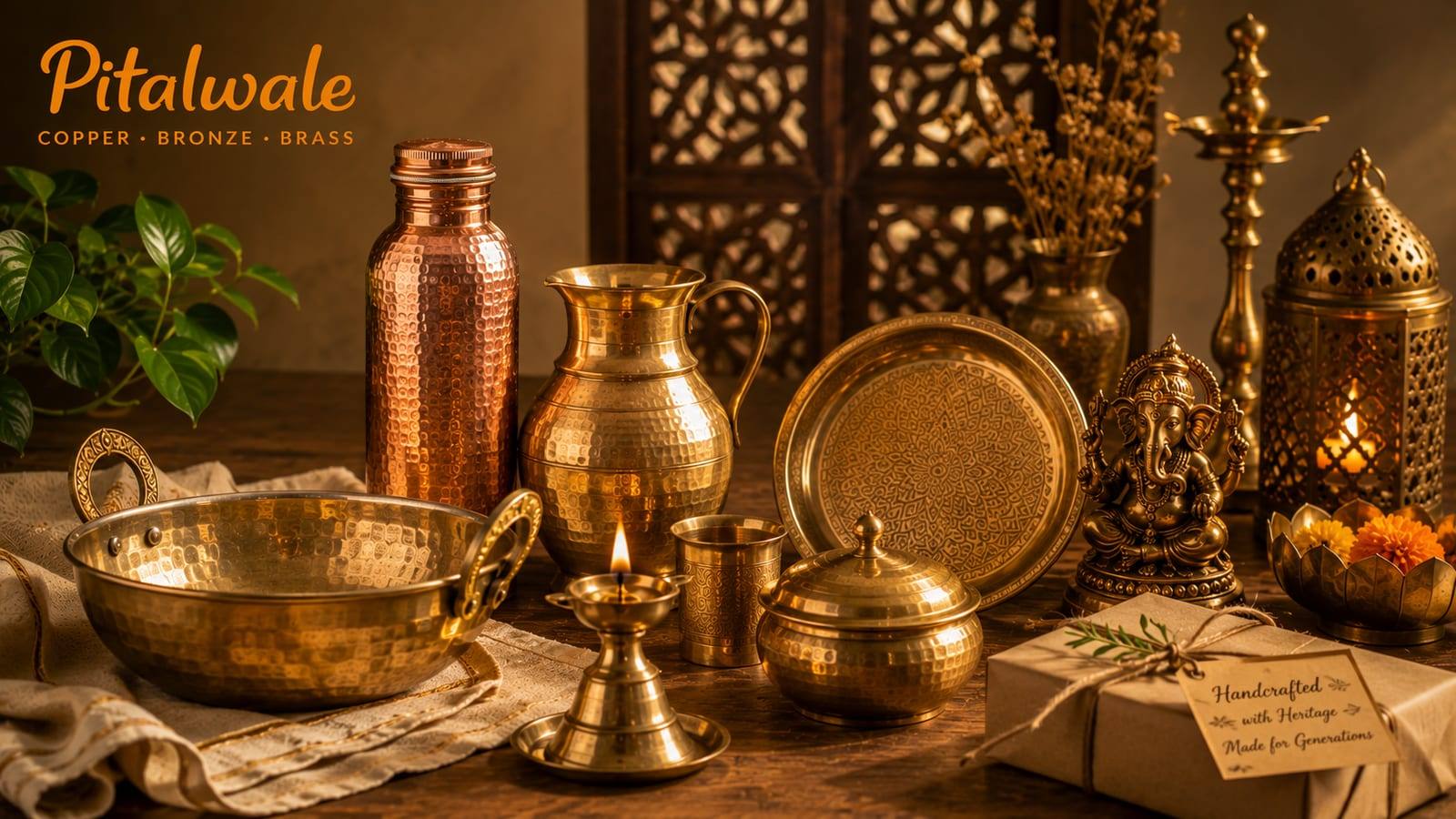
If you've inherited a brass handi or a bronze (kansa) bowl, you've probably noticed a dull silvery coating inside. That's not damage — it's kalai, the traditional tin-lining that makes brass and bronze safe to cook and eat from. Here's what it is, why it matters, and how to look after it.
What is kalai (tin-lining)?
Kalai is the age-old craft of coating the inside of a brass or bronze vessel with a thin layer of food-grade tin. The artisan (a kalaiwala) heats the vessel, rubs it with ammonium chloride (naushadar), and wipes molten tin across the surface with a cotton pad — leaving a bright, food-safe silver lining.
Why brass and bronze need it
Brass (copper + zinc) and bronze (copper + tin) are reactive metals. Cooking salty or acidic food directly in bare brass can leach copper and give food a metallic taste. The tin lining is inert and food-safe, so it forms a protective barrier between the reactive alloy and your food — which is exactly why traditional Indian kitchens have tin-lined their cooking vessels for centuries.
When to re-tin your vessel
Kalai is a wear item. With regular cooking, the tin layer thins over 6–12 months and eventually shows the golden brass or bronze underneath. When you can see the base metal across the cooking surface, it's time to re-tin (re-kalai). It's a quick, inexpensive job for a kalaiwala and restores the vessel to fully food-safe.
Caring for kalai-lined utensils
- No steel wool or harsh scrubbers — they strip the soft tin. Use a soft sponge and mild soap.
- Avoid high dry-heat on empty vessels — tin melts at a low temperature; always have food or liquid in the pan.
- Hand-wash only — never a dishwasher.
- Re-tin when the silver wears through — don't cook acidic food in a vessel showing bare brass.
Kalai vs bare brass: which do you need?
Buy tin-lined (kalai) for anything you'll cook or serve wet, acidic or salty food in. Bare, un-lined brass is fine for dry items, décor, and dry-roasting. If you're choosing a cooking vessel, see our brass kadhai buying guide, and to understand the metals themselves, read copper vs brass utensils.
Frequently Asked Questions
Is tin-lining (kalai) safe? Yes — food-grade tin is inert and has been used to line cooking vessels for centuries. It's what makes brass and bronze safe for daily cooking.
How often should kalai be redone? Roughly every 6–12 months of regular cooking, or whenever you see the base metal showing through the silvery lining.
Do all brass utensils need kalai? Only cooking and wet-serving vessels. Décor and dry-use pieces don't. Browse tin-lined cookware in our kitchen & dining collection.
Bring home a piece worth keeping
Explore our handcrafted brass, copper and bronze collection — free shipping over ₹999.
Shop now