Pure Brass vs Brass Alloy: How to Tell the Difference (and Why It Matters)
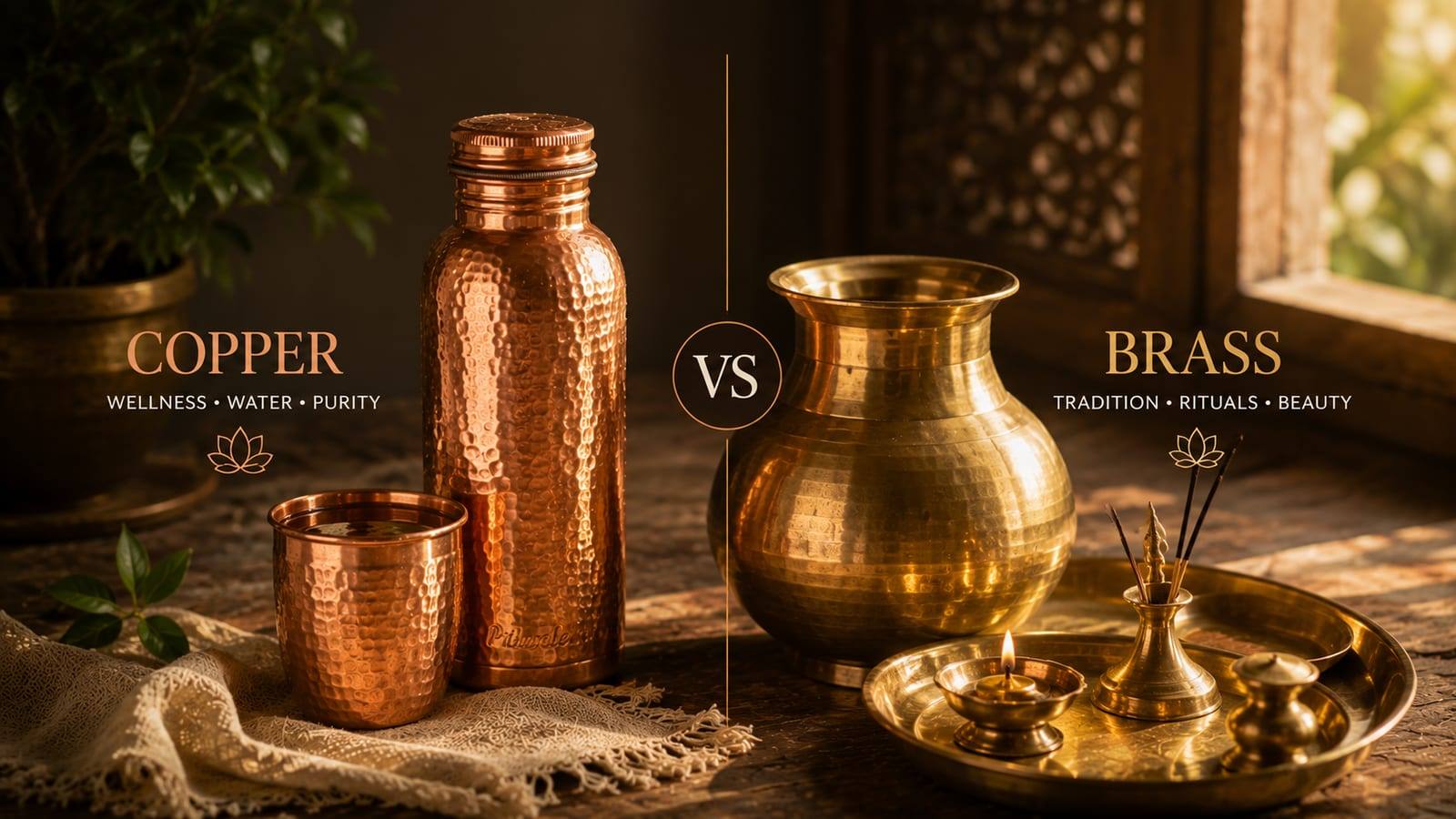
"Pure brass" gets printed on a lot of products that aren't. Since brass is by definition an alloy — and cheaper alloys look almost identical at a glance — it pays to know what you're buying. Here's how to tell genuine, high-copper brass from a diluted alloy, and why the difference matters for cooking, weight and how well a piece ages.
First, what "pure brass" actually means
All brass is an alloy of copper and zinc — there's no such thing as 100% brass element. When artisans say "pure brass," they mean a high-copper ratio, classically around 70:30 (70% copper, 30% zinc), with no cheap filler metals like lead or excess zinc. That high-copper mix gives the warm golden colour, the density, and the graceful patina brass is prized for.
Pure brass vs cheap alloy — the differences
- Colour: high-copper brass is a warm, deep golden yellow. Diluted alloys look paler, greenish or brassy-white.
- Weight: genuine brass is dense and heavy for its size. Filler-heavy alloys feel noticeably lighter.
- Sound: quality brass gives a clear, ringing tone when tapped; cheap alloy sounds dull and flat.
- Ageing: real brass develops a rich patina you can polish back. Poor alloys tarnish patchy and stay dull.
The magnet test (the quickest check)
Genuine brass is non-magnetic. Hold a magnet to the piece — if it sticks firmly, you're looking at brass-plated steel or iron, not solid brass. A faint pull can indicate a high-iron-contaminated alloy. Solid, high-quality brass shows no magnetic attraction at all.
Why it matters for cooking
For cookware, the alloy quality and the tin-lining (kalai) both matter. Solid, high-copper brass conducts heat evenly and lasts generations; thin filler alloys warp and pit. And any brass used for wet or acidic cooking should be tin-lined for safety — see our guide to kalai. For choosing cookware specifically, read the brass kadhai buying guide.
Buying with confidence
Buy from makers who are specific about their metal and craft rather than vague "brass-look" listings. Our pieces are solid, high-copper brass, hand-hammered by artisans in Pital Nagri — browse the kitchen & dining collection or the full range.
Frequently Asked Questions
Is pure brass magnetic? No. Genuine brass is non-magnetic. If a magnet sticks, it's brass-plated steel, not solid brass.
What is the best brass ratio? A high-copper mix around 70:30 copper-to-zinc is the classic standard for quality brass utensils and décor.
Is pure brass safe for cooking? Yes, when it's tin-lined (kalai). The tin layer keeps the brass from reacting with salty or acidic food.
Bring home a piece worth keeping
Explore our handcrafted brass, copper and bronze collection — free shipping over ₹999.
Shop now